If you’ve come across the term psychosynthesis, you may find yourself asking:
What is psychosynthesis, and why does it feel different from other approaches to psychology or personal growth?
Psychosynthesis is an integrative form of spiritual psychology focused on human development and self-realization. It offers a way of understanding the human experience that includes not only thoughts and emotions and the way we show up in the world as a human, but also meaning, purpose, and the deeper and more expansive dimensions of who we are.
It is a psychological and spiritual framework... a lived experience.
Rather than focusing on what is broken, psychosynthesis is concerned with what is emerging.
It asks not only:
What needs to be healed?
But also:
What is seeking to unfold?
A Clear Definition
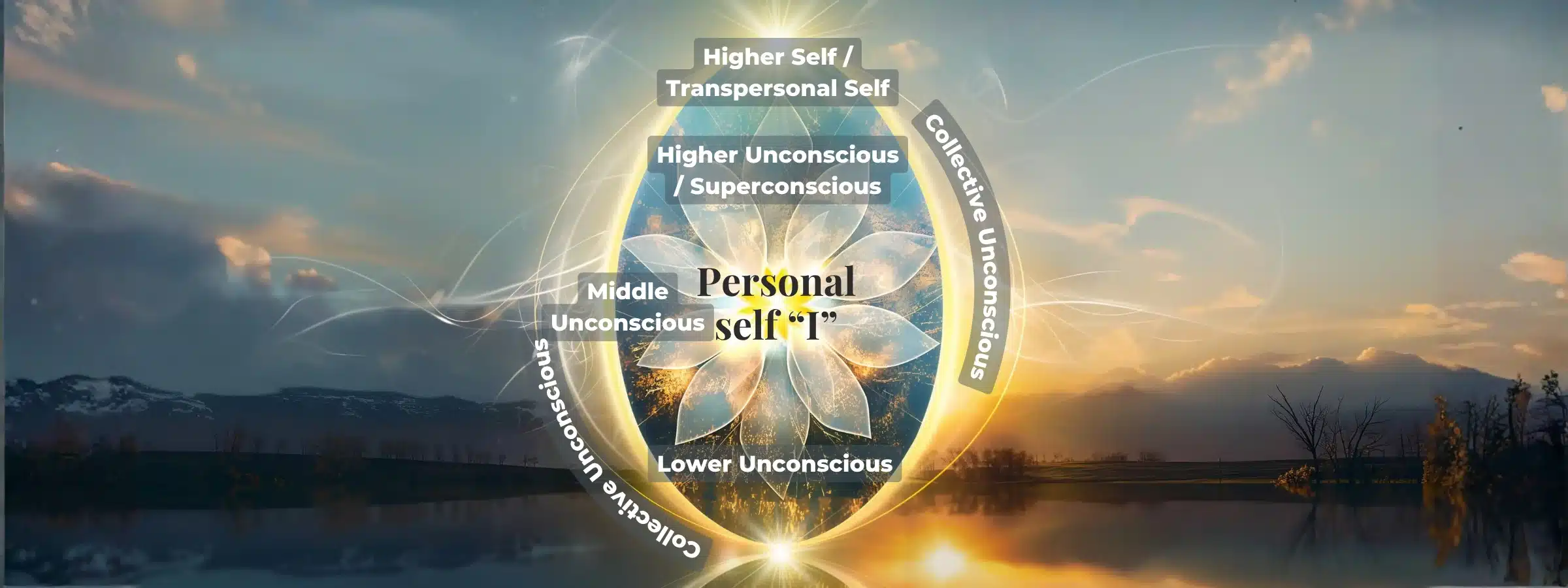
Psychosynthesis is an integrative approach to psychology developed by Italian psychiatrist Roberto Assagioli. It brings together psychological development and spiritual awareness, offering a model of the human experience that includes both the personality and a deeper sense of Self.
Rather than focusing only on what is broken, psychosynthesis is concerned with what is emerging.
It asks not only:
What needs to be healed?
But also:
What is seeking to unfold?
The Movement from Fragmentation to Wholeness
At its core, psychosynthesis recognizes that we often experience ourselves in parts.
Different thoughts, emotions, roles, and patterns can feel as though they are pulling us in different directions.
Instead of trying to eliminate these parts, psychosynthesis invites a process of integration.
This does not mean becoming perfect. It means developing a relationship with all aspects of ourselves so they can be held within a larger field of awareness.
The Observer and the Experience of Self
One of the foundational principles of psychosynthesis is the discovery of the observing center.
This is the aspect of you that can notice thoughts, emotions, and sensations without becoming fully identified with them.
From this place, a shift becomes possible.
Instead of being completely immersed in experience, you begin to relate to experience.
This shift is not about distancing from life. It is about becoming more present to it.
Working with Subpersonalities
Psychosynthesis understands the personality as a dynamic system made up of different parts, often referred to as subpersonalities.
For example:
- a part that seeks control
- a part that longs for connection
- a part that feels fear or doubt
These parts are not problems to be removed. They are expressions of experience.
The work is to recognize, understand, and integrate them.
Learn more:
https://psychospiritualcoaching.com/subpersonalities/
The Will and Conscious Choice
Another essential aspect of psychosynthesis is the development of the Will.
The Will is not force. It is the capacity to act with awareness and intention.
As it develops, a person becomes more able to:
- make conscious choices
- respond rather than react
- live in alignment with what feels true
Explore deeper:
https://psychospiritualcoaching.com/the-will-psychosynthesis/
Psychosynthesis as Spiritual Psychology
Psychosynthesis is often described as a form of spiritual psychology.
It integrates:
- psychological understanding
- personal development
- deeper meaning and purpose
If you are exploring how this connects to coaching: Psychosynthesis Life Coach & Leadership Certification Program
Research and Theoretical Foundations
Psychosynthesis is part of a broader movement in psychology that has explored human development beyond pathology.
Roberto Assagioli first introduced psychosynthesis as an expansion of depth psychology. His work emphasized both psychological integration and the realization of a deeper Self.
Recommended Reading: Psychosynthesis by Roberto Assagioli
His later work on the Will further developed the role of conscious intention in human development.
Recommended Reading: The Act of Will by Roberto Assagioli
Abraham Maslow’s work on human potential also contributed to this shift toward growth-oriented psychology.
Recommended Reading: Toward a Psychology of Being by Maslow
John Firman and Ann Gila expanded psychosynthesis by exploring the relationship between psychological wounding and spiritual development.
Recommended Reading: Psychosynthesis by Firman & Gila
Kenneth Sørensen has brought psychosynthesis into modern leadership and coaching contexts.
Recommended Reading: The Soul of Psychosynthesis by Kenneth Sørensen
Molly Young Brown has contributed to integrating psychosynthesis with ecological awareness and systems thinking.
Recommended Reading: Coming Back to Life by Molly Young Brown
Why Psychosynthesis Matters Today
Many people today feel fragmented or disconnected.
Psychosynthesis offers a way to:
- develop awareness
- integrate different parts of the self
- live with greater clarity and purpose
This is why it continues to grow in relevance across coaching, leadership, and personal development.
Key Takeaways
- Psychosynthesis integrates psychology and spiritual development
- It focuses on awareness, integration, and human potential
- The observing center allows a shift in how we relate to experience
- Subpersonalities are integrated rather than eliminated
- The Will supports conscious, aligned action
Explore the Path
If you feel drawn to this work and want to explore a path that includes both deep personal transformation and practical application, you can learn more about the: Psychosynthesis Life Coach & Leadership Certification Program.
Written by:
Alyssa Whitehouse, MBA, BCC
Co-Founder of Psychospiritual Institute
Board Certified Psychosynthesis Life Coach