
THE SCIENCE OF THE SOUL
What is Psychosynthesis?
Psychosynthesis often gets the title “Psychology with a Soul”. It is a spiritual psychology that brings together both the psychology and science of the psyche AND our deeper spiritual essence, exploring the potential and purpose within each of us. Through various methods and techniques, it recognizes our innermost truth, the Self, supporting us to achieve greater presence, self-awareness, and authenticity.
Psychosynthesis develops and strengthens our Will, our ability to make decisions that align with who we are and what we truly, deeply want, ultimately leading towards greater harmony and participation among people, groups, societies, and the world as a whole.

As an integrative spiritual psychology, psychosynthesis applies methods that promote the natural tendency in each of us to harmonize and synthesize our various aspects at ever more inclusive levels of organization.
As an evolutionary psychology, psychosynthesis consciously cooperates with the natural process of personal and transpersonal development, recognizing our unfolding nature and infinite potential.
Psychosynthesis is a method of psychological development and self realization for those who refuse to remain the slave of their own inner phantasms or of external influences, who refuse to submit passively to the play of psychological forces which is going on within them, and who are determined to become the master of their own lives.
- Roberto Assagioli
All living things contain within them a drive to evolve, to become the fullest realization of themselves. This process can be supported consciously, and Psychosynthesis is one means to do this.
Cooperating effectively with this process can be assisted by a conceptual understanding of the nature of this evolution, and by practical techniques. Psychosynthesis provides these and integrates them into an inclusive and ever-growing framework designed to support the individual, groups, and the planet in their process of unfolding.

From a still wider and more comprehensive point of view, universal life itself appears to us as a struggle between multiplicity and unity - a labor and an aspiration towards union. We seem to sense that - whether we conceive it as a divine Being or as a cosmic energy - the Spirit working upon and within all creation s is shaping it into order, harmony, and beauty, uniting all beings (some willing but the majority as yet blind and rebellious) with each other through links of love, achieving - slowly and silently, but powerfully and irresistibly - the Supreme Synthesis.
- Roberto Assagioli

As a pioneering form of transpersonal psychology, psychosynthesis traces its roots back to 1911 and the visionary work of Italian psychiatrist Roberto Assagioli. Though originally a student of psycho-analysis, Assagioli recognized that Freud’s model focused heavily on pathology. In doing so, it failed to honor the “higher” aspects of the human psyche.
By this, Assagioli references our values, creativity, purpose, and spirituality. Thus, Assagioli offers a more inclusive concept of humanity. Assagioli’s inclusive approach gave rise to psychosynthesis.
This model continues to evolve today through the work across the globe of Therapists, Psychologists, Educators, Physicians, Coaches, Spiritual Leaders, and Healers.
Grounded in both science and spirit, psychosynthesis embraces the idea that we are always growing and always becoming. This system is, by nature, open and evolving. It welcomes insights from emerging fields such as education, medicine, religion, and even physics.
To learn more about Assagioli’s life work, we recommend the Italian documentary about him by Fez Film. Though psychosynthesis is ever-evolving, over the past 60 years, certain conceptual points and methods have proven themselves fundamental. These provide a working structure for psychosynthesis.

A Synthesis of Many Traditions: The Whole Human Experience
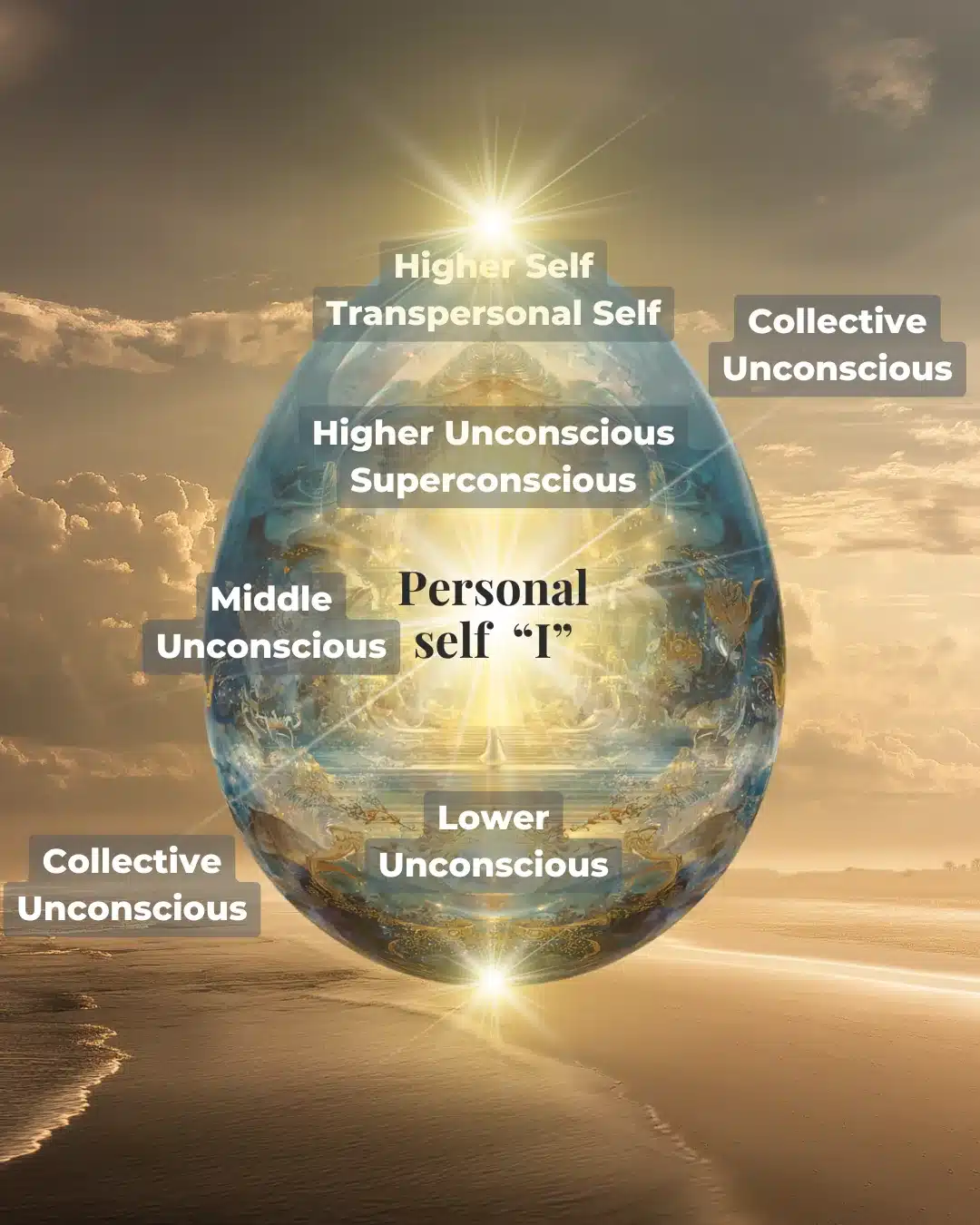
Any comprehensive psychological and educational approach to the development of the whole person must draw from many traditions. While Eastern disciplines often have tended to emphasize the spiritual side of being, Western approaches usually have focused on the personality level. But humanity must be viewed as a whole and each aspect accorded its due importance. Psychosynthesis recognizes that we have a transpersonal essence and, at the same time, holds that the individual’s purpose in life is to manifest this essence, or Self, as fully as possible in the world of everyday personal and social existence.
"Psychosynthesis is an integrative psychology that combines Eastern wisdom about the Self with Western knowledge of the unconscious. Its aim is to formulate a vision of humanity and its potential."
— Kenneth Sørensen
Stages in Psychosynthesis: Personal and Transpersonal Growth
Every individual follows a unique journey, but psychosynthesis recognizes two general stages of development:
Personal Psychosynthesis
This stage involves the integration of the personality around the personal self. Here, the individual becomes increasingly capable of functioning effectively and meaningfully in life, within work, relationships, and day-to-day experiences.
Transpersonal Psychosynthesis
In this phase, the individual opens to the deeper, spiritual dimension of being—the transpersonal Self. They begin to embody qualities such as compassion, purpose, wisdom, global awareness, and inner guidance. These two psychosynthesis stages often overlap, as elements of transpersonal experience can arise even before personal integration is fully achieved.
Take a deep breath. Feel yourself expand into everything around you. You are that vast; you are that powerful. YOU are the Mystery that gave birth to the Universe.
- Val Silidker

Methods Employed in Psychosynthesis: Tools for Transformation
One of the strengths of psychosynthesis is its ability to adapt. Practitioners can use any method that supports the evolution of the whole human being. They choose from a wide array of techniques, tailoring their approach to someone’s psychology, life stage, and goals.
The emphasis is on fostering an ongoing process of growth. Ideally, this can gain momentum and bring more joy and actualization to our lives.
Some common methods include:
- Guided imagery and visualization
- Meditation and mindfulness
- Gestalt techniques
- Movement and somatic practices
- Symbolic artwork and creativity
- Will development & decision-making
- Self-identification exercises
- Journal keeping
- Development of intuition
- The Ideal model and archetypal exploration
These tools are used not just to heal or “fix” what’s wrong but to awaken what’s right and whole within us. As the personal Will grows stronger, we gain freedom from habitual reactions. Instead, we learn to choose responses that align with our deeper knowing, the guidance of the true Self.
As we begin to access the transpersonal Self, we awaken a more universal Will. This offers clarity, direction, and purpose, both in personal and collective life. This inner alignment supports a more serene, cooperative, and empowered way of being in the world.
Many leaders are increasingly recognizing psychosynthesis as a powerful and effective path for personal transformation, spiritual psychology, and leadership. Its influence is expanding in education, healthcare, politics, business, coaching, and therapy. As a living, growing discipline, it continues to evolve in both depth and scope, offering fresh insights and tools for today’s world.
Frequently Asked Questions About Psychosynthesis
Is psychosynthesis evidence-based?
Psychosynthesis is grounded in established psychological principles and has been used for decades in psychotherapy, coaching, and personal development. While it is not typically classified as a clinical modality in the same way as cognitive behavioral therapy (CBT), it draws from depth psychology, humanistic psychology, and transpersonal psychology. Today, psychosynthesis is widely used in coaching and leadership development because of its effectiveness in supporting self-awareness, integration, and purposeful growth.
Q: Who created psychosynthesis?
A: Psychosynthesis was developed by Italian psychiatrist Roberto Assagioli in the early 1900s. A contemporary of Freud and Jung, Assagioli expanded traditional psychology by including the role of meaning, purpose, and the higher self in human development. His work laid the foundation for integrating psychological and spiritual growth in a structured and practical way.
Q: Is psychosynthesis spiritual or psychological?
A: Psychosynthesis is both psychological and spiritual. It bridges traditional psychology with a deeper exploration of meaning, purpose, and inner development. While it includes concepts such as the higher self and personal purpose, it is grounded in psychological frameworks that support emotional integration, self-awareness, and behavioral change. This integration makes it especially powerful for coaching and personal transformation.
Q: How is psychosynthesis used in coaching?
A: In coaching, psychosynthesis is used to help individuals understand and integrate different parts of themselves, referred to as subpersonalities, while aligning with their deeper values and purpose. Coaches trained in psychosynthesis support clients in developing self-awareness, strengthening will and intention, and creating meaningful changes in their lives and careers. It is especially effective for leaders, coaches, and individuals seeking transformation that includes both psychological insight and spiritual growth.
Q: Is psychosynthesis the same as Internal Family Systems (IFS)?
A: Psychosynthesis and Internal Family Systems (IFS) are not the same, but they share important similarities. Both approaches recognize that the human psyche is made up of different “parts” or subpersonalities and focus on developing a deeper relationship with these inner aspects.
Psychosynthesis, developed earlier by Roberto Assagioli, offers a broader and more integrative framework that includes not only parts work but also the development of the will, purpose, and what is often referred to as the higher or deeper self. Internal Family Systems, developed by Richard Schwartz, focuses more specifically on working with internal parts and healing internal conflict.
While IFS has gained more recent popularity, psychosynthesis provides a more comprehensive approach that integrates psychological development with meaning, purpose, and spiritual growth. For this reason, many practitioners experience psychosynthesis as a deeper and more expansive model for transformation.
For a deeper dive introduction to the fundamental ideas of psychosynthesis, we recommend this book by our dear friend and colleague, Kenneth Sørensen, "The Soul of Psychosynthesis".
